 By Daily Fitness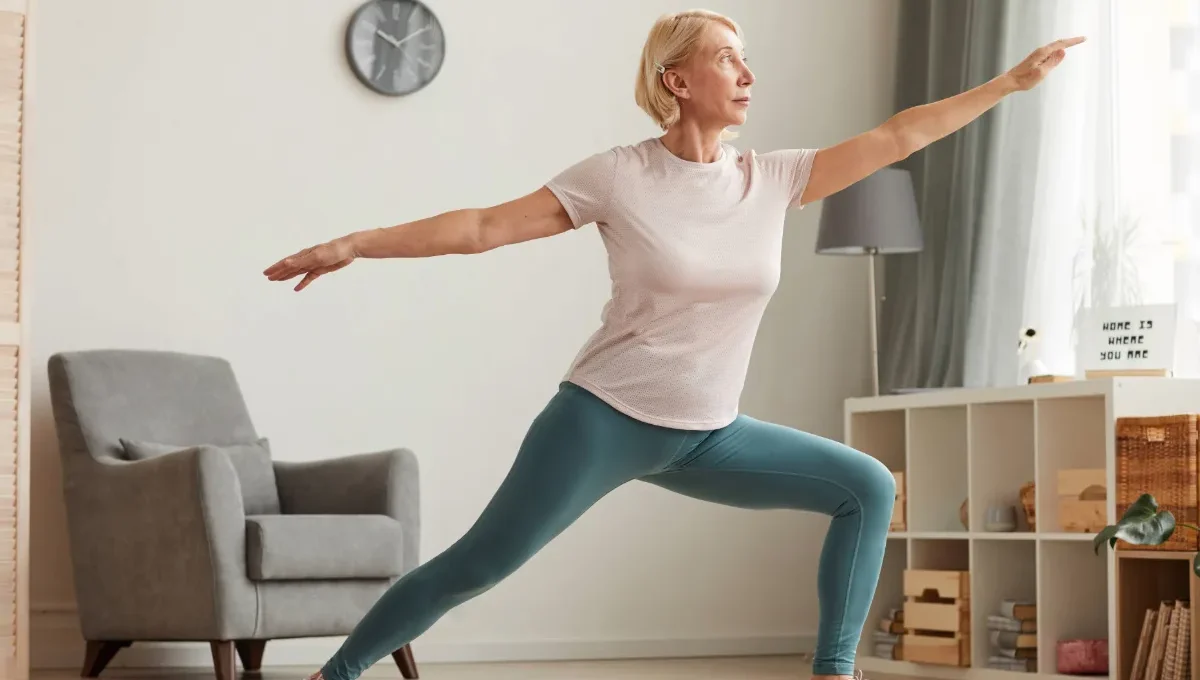
Introduction to Daily Yoga for Balance
Daily yoga for balance is one of the most effective and natural ways to improve stability, coordination, and overall body control. Balance is not just about standing on one leg—it’s about how well your body works as a connected system. From walking and climbing stairs to exercising and carrying groceries, balance plays a key role in everyday movement.
Yoga strengthens both the body and the mind. Through controlled poses, mindful breathing, and steady focus, yoga trains the muscles and nervous system to work together more efficiently. When practiced daily, yoga gradually improves stability, posture, and confidence in movement.
Unlike intense workouts, yoga improves balance gently and safely. This makes it suitable for beginners, older adults, and anyone looking to enhance physical control without high-impact strain.
Why Balance and Stability Matter
Balance and stability are essential for maintaining independence, preventing injury, and improving athletic performance. Poor balance can lead to falls, joint strain, and muscle imbalances. Over time, lack of stability may also contribute to back pain and posture issues.
Good balance helps:
- Maintain proper posture
- Improve coordination
- Enhance movement efficiency
- Reduce risk of falls
- Support joint health
As we age, balance naturally declines due to muscle weakness and reduced coordination. Daily yoga helps counteract this decline by strengthening stabilizing muscles and improving body awareness.
How Yoga Improves Coordination and Control
Yoga improves coordination by training multiple muscle groups to work together. Many yoga poses require standing on one leg, shifting weight smoothly, or maintaining steady alignment. These movements activate stabilizing muscles that are often underused in daily life.
Yoga also improves neuromuscular control—the connection between the brain and muscles. By practicing slow, controlled movements, the nervous system becomes more efficient at sending signals that maintain balance and posture.
Over time, this increased coordination leads to smoother movements, better control, and improved overall stability.
Benefits of Daily Yoga for Balance and Stability
Practicing yoga daily offers both physical and mental benefits. Consistency is key, as small improvements build over time into noticeable strength and stability gains.
Strengthens Core Muscles
The core is the foundation of balance. It includes not just the abdominal muscles but also the lower back, hips, and pelvic muscles. Daily yoga activates and strengthens these areas through poses like plank, boat pose, and standing balances.
A strong core:
- Supports spinal alignment
- Improves posture
- Reduces lower back pain
- Enhances overall stability
Without core strength, maintaining balance becomes difficult. Yoga strengthens these muscles gently but effectively.
Improves Posture and Alignment
Poor posture weakens stabilizing muscles and shifts body weight unevenly. Yoga emphasizes proper alignment in every pose, helping retrain the body to maintain better posture naturally.
Improved alignment:
- Reduces joint strain
- Enhances balance
- Improves breathing efficiency
- Prevents muscle imbalances
Daily yoga gradually corrects posture by strengthening weak muscles and stretching tight areas.
Enhances Body Awareness
Body awareness, also known as proprioception, is the ability to sense where your body is in space. Yoga enhances this awareness by encouraging mindful movement and focused attention.
With improved body awareness:
- Movements become more controlled
- Reaction time improves
- Balance adjustments happen faster
This increased awareness is especially helpful in preventing trips, slips, and awkward movements.
Reduces Risk of Falls and Injury
Improved balance and stability reduce the likelihood of falls and injuries. Strong stabilizing muscles protect joints and help maintain control during unexpected movements.
Daily yoga builds:
- Strong ankles and hips
- Better joint stability
- Improved coordination
These benefits are especially important for older adults and beginners who may feel unsteady during physical activities.
Supports Mental Focus and Calmness
Balance in yoga requires concentration. When holding a balancing pose, the mind must remain calm and focused. This strengthens mental clarity and reduces distractions.
Yoga activates the parasympathetic nervous system, which promotes relaxation and reduces stress. As a result, daily practice not only improves physical balance but also enhances emotional stability and calmness.
How Yoga Improves Balance
Yoga improves balance by combining strength, flexibility, and mindfulness. Unlike quick movements in other exercises, yoga focuses on slow transitions and steady holds, allowing the body to adapt safely.
Balance in yoga comes from three main elements:
- Core strength
- Stabilizing muscle engagement
- Controlled breathing
When these elements work together, overall stability improves significantly.
The Role of Core Strength
Core strength is essential for maintaining balance in both static and dynamic movements. During yoga poses, the core acts as a stabilizing center that keeps the body upright and aligned.
A weak core forces other muscles to compensate, which can reduce balance and increase injury risk. Daily yoga strengthens deep core muscles that support the spine and pelvis, making balance more stable and controlled.
Engaging Stabilizing Muscles
Stabilizing muscles are smaller muscles around the ankles, knees, hips, and shoulders. These muscles are responsible for keeping joints steady during movement.
Many yoga poses—such as Tree Pose or Warrior III—activate these stabilizers. Over time, these muscles become stronger and more responsive, leading to improved balance and coordination.
Breathing and Mind-Body Connection
Breathing plays a crucial role in balance. Controlled breathing keeps the nervous system calm and prevents tension that can disrupt stability.
In yoga, deep and steady breathing:
- Enhances focus
- Reduces wobbling
- Improves oxygen flow
- Strengthens the mind-body connection
When the breath is steady, the body becomes more grounded and balanced. This mind-body awareness is what makes yoga uniquely effective for improving stability.
Best Daily Yoga Poses for Better Balance
Improving balance isn’t just about standing on one leg — it’s about building strength, control, focus, and body awareness. These yoga poses are ideal for beginners and can be practiced daily to develop stability safely and effectively.
Mountain Pose (Tadasana)
Purpose: Foundation of all standing poses
Although it looks simple, Mountain Pose teaches proper alignment and grounding.
How to Do It:
- Stand with feet hip-width apart.
- Distribute weight evenly across both feet.
- Engage your thighs and core.
- Lengthen your spine and relax shoulders.
- Keep arms by your sides and breathe deeply.
Balance Benefits:
- Improves posture and alignment.
- Builds awareness of weight distribution.
- Strengthens feet and leg muscles.
- Teaches steady breathing while standing still.
Tip: Close your eyes for a few seconds to challenge your balance.
Tree Pose (Vrikshasana)
Purpose: Builds single-leg stability
Tree Pose is one of the best beginner balance poses.
How to Do It:
- Stand tall in Mountain Pose.
- Shift weight onto one foot.
- Place the opposite foot on the inner calf or thigh (avoid the knee).
- Bring hands together at the chest or overhead.
- Focus on a fixed point (drishti).
Balance Benefits:
- Strengthens ankles, calves, and thighs.
- Activates core stabilizers.
- Improves concentration and mental focus.
Beginner Tip: Keep toes on the floor with heel resting on ankle for support.
Warrior III (Virabhadrasana III)
Purpose: Improves strength and dynamic balance
This is a more advanced balance pose but can be modified.
How to Do It:
- Start in a standing position.
- Shift weight to one leg.
- Hinge forward at the hips.
- Extend the other leg straight behind you.
- Keep hips square and spine long.
Balance Benefits:
- Strengthens glutes and hamstrings.
- Engages deep core muscles.
- Improves coordination and body control.
Modification: Keep hands on a wall or chair for support.
Eagle Pose (Garudasana)
Purpose: Enhances joint stability and focus
Eagle Pose challenges both lower and upper body balance.
How to Do It:
- Slightly bend your knees.
- Wrap one thigh over the other.
- Cross opposite arm under and wrap palms together.
- Keep spine straight and sit slightly back.
Balance Benefits:
- Strengthens ankles and knees.
- Improves joint stability.
- Enhances coordination and concentration.
Tip: If wrapping legs is difficult, keep toes lightly touching the floor.
Half Moon Pose (Ardha Chandrasana)
Purpose: Builds lateral stability
This pose challenges side-body balance.
How to Do It:
- Start in a standing forward lunge.
- Place one hand on the floor or block.
- Lift back leg parallel to floor.
- Extend top arm toward the ceiling.
- Keep chest open.
Balance Benefits:
- Strengthens outer hips.
- Improves side-body strength.
- Enhances spatial awareness.
Beginner Tip: Use a yoga block under your hand for better support.
Chair Pose (Utkatasana)
Purpose: Strengthens lower body for stability
Though not a one-leg pose, it builds the strength needed for balance.
How to Do It:
- Stand tall.
- Bend knees as if sitting back into a chair.
- Lift arms overhead.
- Keep chest lifted and core engaged.
Balance Benefits:
- Strengthens thighs and glutes.
- Improves ankle stability.
- Builds endurance in stabilizing muscles.
Beginner-Friendly Daily Yoga Routine (15–20 Minutes)
This simple routine combines the above poses into a balanced flow.
Warm-Up Movements (3–5 Minutes)
Prepare your body before balancing.
Suggested Warm-Up:
- Gentle neck rolls
- Shoulder shrugs
- Arm circles
- Hip circles
- Marching in place
- Slow standing forward fold
Why Warm-Up Matters:
- Increases blood flow
- Reduces injury risk
- Improves muscle activation
- Enhances joint mobility
Standing Balance Sequence (10–12 Minutes)
Follow this simple flow:
- Mountain Pose – 1 minute
- Tree Pose (Right Side) – 30–45 seconds
- Tree Pose (Left Side) – 30–45 seconds
- Chair Pose – 45 seconds
- Warrior III (Right) – 30 seconds
- Warrior III (Left) – 30 seconds
- Eagle Pose (Right) – 30 seconds
- Eagle Pose (Left) – 30 seconds
- Half Moon (Right) – 30 seconds
- Half Moon (Left) – 30 seconds
Focus on:
- Slow breathing
- Core engagement
- Fixing your gaze
- Controlled transitions
Take short rests if needed.
Cool-Down and Stretching (3–5 Minutes)
Cooling down helps relax muscles and improve recovery.
Suggested Cool-Down:
- Standing forward fold
- Seated hamstring stretch
- Butterfly stretch
- Deep belly breathing
- Gentle seated twist
End with:
- 1–2 minutes of deep breathing
- Relax shoulders and jaw
- Slow, mindful inhales and exhales
Final Tips for Better Balance Progress
- Practice daily or at least 4–5 times per week.
- Start slow and increase hold time gradually.
- Practice barefoot for better grounding.
- Focus on breathing — never hold your breath.
- Be patient; balance improves with consistency.
With just 15–20 minutes daily, you’ll notice:
✔ Stronger legs and core
✔ Better posture
✔ Improved coordination
✔ Increased confidence in movement
Common Mistakes to Avoid
Practicing daily yoga for balance is highly beneficial, but small mistakes can slow progress or even lead to discomfort. Being aware of these common errors will help you improve faster and stay safe.
Holding Breath During Poses
One of the most common beginner mistakes is unintentionally holding the breath while concentrating on balance.
Why It’s a Problem:
- Reduces oxygen supply to muscles
- Increases tension in the body
- Makes balancing harder
- Raises stress levels
What to Do Instead:
- Inhale slowly through your nose.
- Exhale fully and steadily.
- Match your breath with your movement.
- If you feel unstable, pause and take 2–3 deep breaths.
Remember: Breathing controls balance. A calm breath creates a steady body.
Locking the Knees
Locking or hyperextending the knees while standing can strain joints and reduce stability.
Why It’s a Problem:
- Puts pressure on knee joints
- Decreases muscle engagement
- Reduces shock absorption
- Increases injury risk
What to Do Instead:
- Keep a slight micro-bend in the standing leg.
- Engage thigh muscles gently.
- Focus on lifting through the kneecap without pushing it back.
A soft knee creates stronger balance than a locked knee.
Rushing Through Movements
Balance improves through slow, controlled transitions — not speed.
Why It’s a Problem:
- Reduces muscle control
- Increases risk of losing balance
- Limits body awareness development
What to Do Instead:
- Move slowly into each pose.
- Hold poses for at least 20–40 seconds.
- Transition mindfully between sides.
Slower movement builds deeper strength and coordination.
Skipping Warm-Up
Jumping straight into balance poses without preparing your body can lead to stiffness and instability.
Why It’s a Problem:
- Cold muscles react slower
- Joints feel tight
- Higher injury risk
What to Do Instead:
- Spend 3–5 minutes warming up.
- Include gentle joint rotations.
- Activate your core and legs before standing balances.
Even a short warm-up significantly improves performance.
How Often Should You Practice?
Consistency is key, but balance training doesn’t require long sessions.
Daily vs 3–4 Times Per Week
Practicing Daily:
- Builds faster neuromuscular coordination
- Improves muscle memory
- Strengthens stabilizing muscles consistently
- Ideal for short 10–20 minute sessions
Practicing 3–4 Times Per Week:
- Allows recovery time
- Good for beginners feeling muscle soreness
- Still effective for steady improvement
If you’re new, start with 3–4 days per week, then gradually increase to daily practice as your strength improves.
Listening to Your Body
Your body gives signals — learn to recognize them.
Healthy Signs:
- Mild muscle fatigue
- Slight soreness
- Gradual improvement in stability
Warning Signs:
- Sharp joint pain
- Persistent knee or ankle discomfort
- Extreme fatigue
- Dizziness
If you experience pain, rest and adjust intensity. Yoga should feel challenging but not painful.
Tracking Progress and Staying Consistent
Balance improves gradually, so tracking small wins helps maintain motivation.
Noticing Improved Stability
Progress may show up in subtle ways:
- Standing longer without wobbling
- Smoother transitions between poses
- Stronger ankle stability
- Better posture during daily activities
- Improved focus and calmness
Take note of how you feel — not just how long you can hold a pose.
Building a Sustainable Yoga Habit
Consistency beats intensity. To make yoga part of your life:
Practical Tips:
- Practice at the same time daily.
- Keep your yoga mat visible.
- Start with short sessions (10–15 minutes).
- Pair yoga with another daily habit (after brushing teeth, before breakfast, etc.).
- Track your sessions in a notebook or app.
Creating a routine makes practice automatic instead of optional.
Conclusion
Improving balance through daily yoga is a gradual and rewarding process. Avoiding common mistakes like holding your breath, locking your knees, rushing movements, or skipping warm-ups will help you progress safely.
Balance isn’t just physical — it’s mental. As your body becomes steadier, your focus and confidence improve as well.
Final Tips for Improving Balance with Yoga
- Practice consistently, even if briefly.
- Focus on slow, steady breathing.
- Engage your core in every standing pose.
- Keep your gaze fixed on one point.
- Progress gradually — don’t force advanced poses.
Small daily efforts create lasting results.
Making Daily Yoga Part of Your Lifestyle
Balance training doesn’t need to be complicated. A simple 15-minute routine can:
✔ Strengthen your body
✔ Improve posture
✔ Increase coordination
✔ Reduce fall risk
✔ Calm your mind
Make yoga a non-negotiable part of your routine — like brushing your teeth. Over time, you’ll notice not just better balance on the mat, but greater stability in everyday life.